
Blog
How to Spot Fake Thirty One Hats Before You Buy

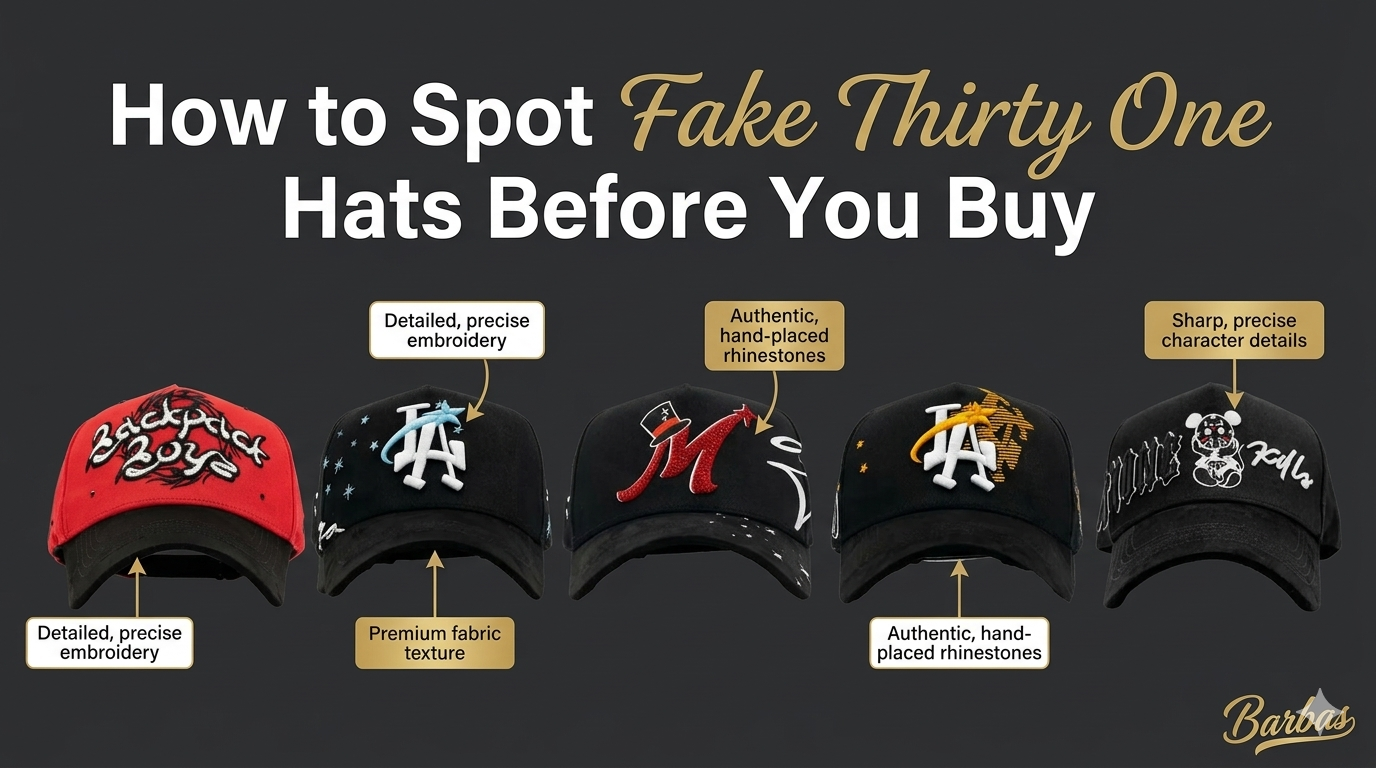
Purchasing a stylish accessory that is trending such as a luxury Thirty One hat may be fun, yet there is a drawback that accompanies it and this is the presence of fake products. Over the last couple of years, the sales of counterfeit imitations of Thirty One hats have increased, as the popularity of the hats is increasing too, with more counterfeit hats being sold on websites and unauthorized markets. These reproductions may seem attractive as they are relatively low priced, yet they lack quality, fit, and craftsmanship. Worse than that, the fact that you are buying something that is not recognized makes you a fan in joining bad practices and end up with something that has no value. This guide will take you through the process of identifying fake thirty one hats before your purchase in a manner that ensures you do not purchase a product that will fail to deliver what you need.
Know Well-known Branding and Logos
The branding and logo information is one of the surest mechanisms of determining whether a Thirty One hat is authentic. True hats have a true logo that has been embroidered or printed in high quality. The fake versions usually have the logos that appear to be somehow out of place: maybe the font is not straight, or too thin or too thick, or the spacing is not even. It is possible that the font is corrupt, or certain tiny details of the design are absent. Although the subject matter of the logo might seem similar immediately, an in-depth examination can prove to say a lot about the genuineness of the logo. Authentic branding is very sharp, balanced and consistent throughout all products whereas knockoffs will have discrepancies.
Material Quality and Construction
Thirty One has a reputation of bringing quality craftsmanship and style. This implies that they are crafted using high quality fabrics, accurate stitching and formulated designs. Take a close look at a hat, check the texture of the fabric, the lines of stitching, and the general solidity of a hat. Real hats must have tight knit stitches, and no loose threads. The brim must be stiff and not appear floppy and uneven. When the hat making fabric is flimsy, cheap, or thin, when compared with the one you have seen in official product pictures, then that could be the case of a fake. False hats usually trim edges on materials since they do not focus on quality products and rather focus on lower prices.
Labels, Check Tags and Packaging
Thirty One hats are official hats, with certain tags and labels that show authenticity. These typically come with brand tags printed in a clear font, good positioning of the labels within the hat, and even some other details such as care instructions or serial codes. This is a red flag in case you get a hat that does not have tags, or its tags are cheap, unprinted awkwardly, or in the wrong position. Also, authentic hats are usually well packaged to portray the quality of the brand. Bogus brands can be brought in simple or low-quality packaging which does not carry any branding information whatsoever.
Preliminary Investigations on the Seller and Product Listings
Do some research on the seller before making a purchase. The official Thirty One hats are typically distributed in official stores or brand partner stores or official website. Suppose you discover the hats on sale in the market places or through sellers who do not clearly recognize their authenticity, be cautious. Find reviews on customers, ratings of the sellers and past transaction history. Should one of the listings sell the hat at an exceptionally low price without any brand confirmation, then it is probably too good to be true. Authentic sellers tend to show a clear photo of the product, which is described with details and to give clear prices whereas fake sellers need minimal description and cheap prices to lure customers.
Opposed to Official Images
The most efficient methods of identifying a fake include comparison. Another thing to do before you purchase is to seek out official photos of an authentic product on the official site or other trusted retailers and compare them against what you will find in listing that you are looking at. Pay attention to such details as the number of threads in embroidery, shape of logo, spacing between letters, height of crown and shape of the hat in general. Fashion imitations normally copy the appearance, but do not emulate the minor details in the design. In other instances the discrepancies may be minor, though with a careful observation one can easily unravel contradictions indicating a forgery.
Touch the Heavy and the Fat
Authentic Thirty one hats tend to have a certain weight and they tend to fit indicating the quality of materials and manufacture. Whenever in a position, attempt to wear the hat or to touch one of its genuine counterparts. One would find a knock-off hat to be lighter, softer, or weirdly shaped. Internal sweatband could have been installed improperly or of the low quality. The fit may be awkward, or tight in some part, or loose in others. Although the approach involves physical inspection, it can be a good final examination, particularly when other conditions have induced suspicion.
Caution Unofficial Promotional Claims
The numerous counterfeit vendors attempt to make an impression of being real by utilizing buzz terms in their descriptions such as limited edition, rare drop, or exclusive release. Although there are legitimate limited editions, legitimate sellers will be the people who can confirm such claims. When a seller is making claims that is supposed to be done through official reservations, product codes and brand verifications, be wary. The official releases are normally announced in a clear and straightforward way via the communication channels of the brand, but fake sellers utilize hype to attract the customers without providing any real evidence.
Customers and Support Policy
Checking the return policy and customer support opportunities is one of the most feasible methods of protection on the way to purchase. True sellers will generally have transparent-return and-refund policies, and will have guarantees regarding protection of buyers. In a situation where a seller is not provided with a way to return the item or when he does not want exchanges, this could be a signal that such a seller does not sell official merchandise. The fact that you can return a product in case it does not live up to your expectations gives an added protection and confidence.
Price Is A Warning Sign Too
A lot can be learned about a hat by the price. When a price is markedly lower than anything you have seen on official market listings or reputable retailing companies, then it ought to cause concern. Sales and discount do occur, but the hardest tactic employed by counterfeit sellers is extreme underpricing. Price comparison It is important to always make a comparison with the official price before thinking that some low price is a good one.
Enhance the Familiar Counterfeit Circuits
Imitated products will also follow a similar pattern in due course. Their logo may be overdone, their color schemes may be unnatural, their tags may be misplaced or the stitches may not run evenly. When you know how real Thirty One hats should look in terms of details and a way they are made, it is not difficult to see when something is wrong. When confronted with one of such common fake patterns, you will be able to sharpen your eye by educating yourself on these specific patterns thus preventing the likelihood of being misled.
Trust Your Instincts
Most of the time when something was off it was likely to be that way. It could be product image quality, what the seller is saying, or an abnormally low price. Your instincts will probably not fail you when something wrong catches your eye. Fashion purchases (but not especially the case with those that are premium or collectible) should be given a moment of pause and checked before proceeding.
Frequently Asked Questions of Faking Thirty One Hats
What will I do to know whether a Thirty One hat is real or not just by seeing it?
Authentic Thirty one hats: they are properly embroidered with the logo, have regular stitches, good materials, and defined brand labels. Minor details are important.
Do counterfeiting Thirty One hats cost less?
Yes, fake items tend to be cheaper by far compared to original goods. A price that is too good to be true is most likely to be so.
Will packaging be able to determine an imitated hat?
Yes. Original hats are typically accompanied by official labels and branded packs. Simple and cheap quality packaging can pass as a counterfeit.
Are counterfeit hats incorrectly labeled?
Often, yes. Counterfeits can include hats with incorrect tags/labels, tags that are absent or attached to a different position on the hat.
Should I purchase only official sellers?
Purchasing through official or authorized stores minimizes the chances of acquiring pirated items significantly and in most cases returns policies.
What information must I match against the official product picture?
Compare shape of logos, embroidery work, and stitching line, shape of crown, and proportion of the design.
Are Customer Reviews any use?
Yes. The reviews and ratings would reveal whether a seller is reputable or past consumers were provided with fake merchandise or not.